Soul of the Soil 2026
August 25, 2026 @ 8:00AM — August 26, 2026 @ 5:00PM Central Time (US & Canada) Add to Calendar
Sinsinawa Mound Center: 515 County Rd Z Sinsinawa, WI 53824 Get Directions
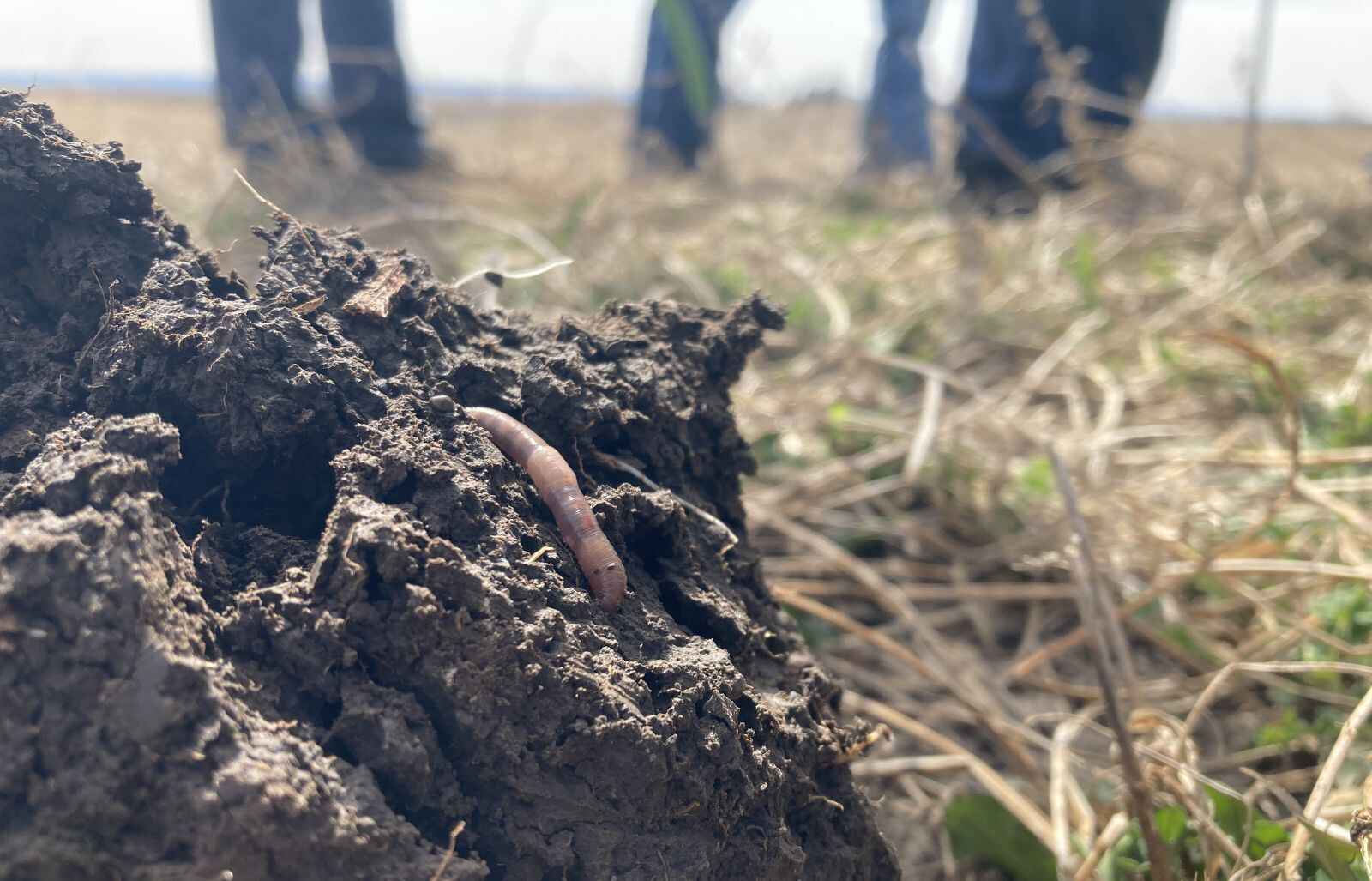
Rooted in Soil. Growing Together.
Join Fields of Sinsinawa for two days of learning about soil functionality, where the science of regenerative agriculture meets a deeper sense of connection to people, purpose, and place. Through diverse voices—from farmers and researchers to storytellers and practitioners—you’ll explore how living soil systems support resilient farms, thriving communities, and a more meaningful way of stewarding the earth. Plus, enjoy illuminating field tours, delicious meals, and engaging networking opportunities!
General admission tickets include breakfast, lunch, and dinner on Day 1 and breakfast and lunch on Day 2, though the option to attend without dinner on Day 1 is also available.
Confirmed speakers include:
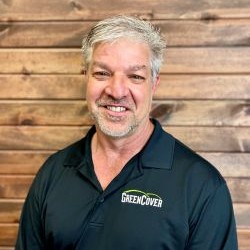
Keith Berns, Green Cover Seed
Green Cover co-founder and co-owner Keith Berns makes the case for "StewMinion," in which he discusses the importance of actively nurturing, protecting, and improving the land, encouraging farmers and individuals alike to give back more than they take. He also touches on regenerative living, emphasizing the need to apply these principles to various aspects of life including job performance, finances, relationships, and community involvement.
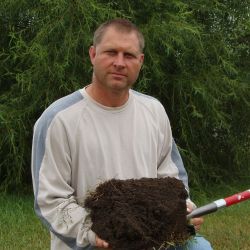
Doug Peterson, Soil Health Academy
Doug Peterson brings together something rarely found in agriculture today: decades of scientific expertise paired with real-world farming experience. Raised on a crop and livestock farm in northern Missouri, Doug has spent his life studying—and living—the complex relationship between soil, plants, animals, economics, and human decision-making.
Over a 32-year career with the USDA Natural Resources Conservation Service, Doug served in roles ranging from Soil Scientist to Regional Soil Health Specialist, helping farmers and ranchers across the country better understand how healthy soils drive productivity, resilience, water quality, and long-term profitability. Following his retirement from NRCS, he served as Science Officer for Regenified, where he helped develop regenerative verification and certification systems designed to support both farmers and brands seeking measurable, trustworthy outcomes, and now works with Soil Health Academy as an instructor.
But Doug’s perspective extends far beyond theory. For more than 35 years, he has operated his own cow/calf and contract grazing operation, using adaptive regenerative grazing to restore soil function, dramatically reduce fertilizer dependence, and work more in partnership with natural systems. His practical, hands-on approach makes complex soil health concepts accessible and deeply relatable to producers navigating real economic and environmental pressures.
At Soul of the Soil, Doug will explore how decades of well-intentioned agricultural policy have often produced unintended consequences for farmers, landscapes, and rural communities alike. Drawing from both his government and on-the-ground experience, he will challenge audiences to reconsider the assumption that agriculture must constantly fight against nature in order to succeed. Instead, Doug will share why working with ecological processes can reduce dependency on outside inputs and interventions while building healthier farms, healthier communities, and greater long-term resilience.
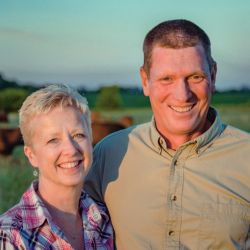
Dawn & Grant Breitkreutz, Stoney Creek Farm
For nearly three decades, Dawn and Grant Breitkreutz have been reimagining what a thriving farm can look like at Stoney Creek Farm near Redwood Falls, MN. What began as a conventional row crop and cow/calf operation has evolved into a diverse, regenerative family enterprise rooted in soil health, ecological resilience, and a deep commitment to future generations.
Today, their farm integrates diverse crop rotations, cover crops, 100% no-till practices, and adaptive multi-paddock grazing across nearly every acre of the land. Livestock are thoughtfully integrated into the system year-round, helping restore biological function while producing pasture-raised beef, pork, chicken, and eggs.
Known for their practical wisdom and honest storytelling, Grant and Dawn are passionate about sharing both the challenges and rewards of regenerative agriculture. At Soul of the Soil, they will explore how working with nature—not against it—can heal the land, strengthen farm resilience, and create a lasting legacy of abundance and hope.
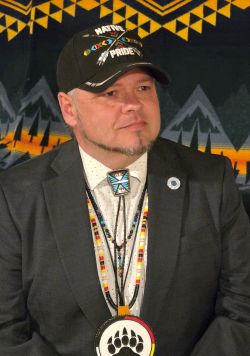 Tim Rhodd, Ushana Nawe, LLC
Tim Rhodd has spent years helping bridge the gap between agricultural practices and the deeper values of stewardship, responsibility, and care for the land. During his time leading the Iowa Tribe of Nebraska and Kansas, Tim recognized that the tribe’s farming systems were no longer aligned with their cultural principles or long-term vision for the future. Rather than accept the status quo, he helped lead a bold effort to rethink and rebuild the tribe’s agricultural approach from the ground up.
That journey led to the adoption of soil health-focused practices including no-till farming, cover crops, and organic production—changes that required persistence, experimentation, and a willingness to challenge deeply ingrained systems. The process was not easy, but it opened the door to a more resilient and regenerative future for the land and the community.
Today, through Ushana Nawe—meaning “the helping hand”—Tim works alongside other farmers and land stewards who are seeking their own path toward regenerative agriculture.
In his presentation, "Going Backwards to Progress Ahead", Tim will share the tribe’s powerful story of transition: the hard decisions, the obstacles they faced, and the lessons learned along the way. His perspective offers an honest and hopeful look at what becomes possible when agricultural systems are guided not only by economics, but by values, relationships, and responsibility to future generations.
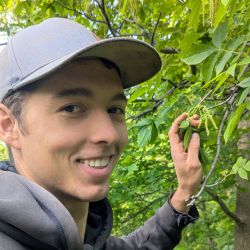
Levi Geyer, Fancy Twig Farm
Levi Geyer of Fancy Twig Farm in Parnell, IA, brings a refreshingly community-centered vision for what farming and food access can become. His work is rooted in the simple but powerful idea that nourishing people begins not only with food itself, but with restoring people’s relationship to the land, to one another, and to the labor that sustains us.
Through the generosity of neighbors and community members, Levi has harvested nuts from trees growing across many different properties, transforming overlooked abundance into handcrafted oils and shared opportunity. In return, he has planted free trees, shared practical knowledge, and helped others reconnect with the process of growing and harvesting food for themselves.
At Soul of the Soil, Levi will explore how community-scale food systems can meet both practical and deeper human needs—offering nourishment, belonging, dignity, and connection. His story challenges conventional ideas about land ownership, labor, and agriculture, inviting us to imagine a future where food is not simply consumed, but collectively stewarded and shared.
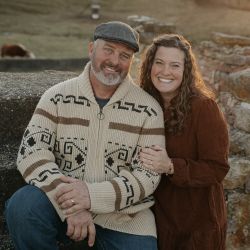
Jen & Jerry Volenec
For Jen Volenec and Jerry Volenec of Hardscrabble Farms, the journey toward regenerative agriculture is about reimagining the future of their family farm. Motivated in part by a hope that their four daughters might one day want to return home after college, Jen and Jerry made the difficult decision to step away from confinement dairy farming and begin building something new.
Their reflections on dispersing the family dairy herd speak to the emotional weight carried by so many farm families navigating change. For generations, their family cared for those cattle and the land beneath them. Moving in a new direction was not simply a business decision—it was an act of faith, resilience, and hope.
At Soul of the Soil, Jen and Jerry will share the deeply personal story behind their regenerative transition: the grief and uncertainty, the lessons learned, and the possibility they now see emerging on the other side. Their experience offers a powerful reminder that regenerative agriculture is about more than rebuilding soil health—it is also about rebuilding relationships, renewing purpose, and creating farms that future generations may once again feel called home to steward.
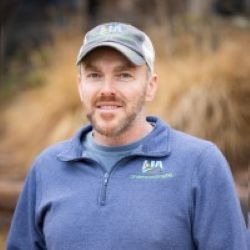
Brian Dougherty, Wild Type Ranch and Understanding Ag
Brian Dougherty brings together the perspective of a lifelong farmer, a scientist, and a global student of regenerative agriculture. Raised on a family dairy farm near Waukon, IA, Brian spent nearly two decades managing dairy cattle and raising crops before stepping away from the farm to better understand the ecological systems that underpin healthy land. That journey led him through advanced studies in ecological engineering and agricultural systems, research on soil health and water quality, and eventually around the world as a Nuffield International scholar exploring regenerative solutions across diverse farming landscapes.
Over the years, Brian has worked with farmers throughout the Midwest on soil health, nutrient management, water quality, composting, grazing systems, and regenerative transition strategies. Through his work with Understanding Ag and his continued learning alongside leading regenerative practitioners, he has become a thoughtful advocate for moving beyond chemistry-dependent agriculture and rebuilding the biological function of soils. He also contributes at Wild Type Ranch near Madison, where the work extends beyond food production to a broader vision of nourishment, healing, and human connection.
At Soul of the Soil, Brian will share his perspective on why regenerative agriculture matters not only for environmental resilience, but for human well-being. Drawing from both science and lived experience, he will explore how healthy ecosystems, nutrient-dense food, meaningful labor, and connection to land can help nourish the body while also restoring something deeper within us.
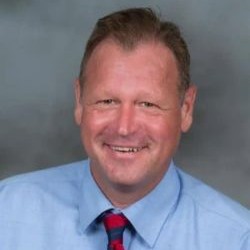
Dennis Busch
Dennis Busch serves as Research Manager at the University of Wisconsin-Platteville's Pioneer Farm, where he oversees projects focused on grazing systems, forage production, surface water runoff, and watershed health within the Fever River region. With academic training spanning agricultural business, ag industries, and water resources science—including a Ph.D. from the University of Minnesota Twin Cities—Dennis brings a practical and research-driven perspective to understanding how farming practices impact the landscape.
At Soul of the Soil, Dennis will share early insights from the water monitoring work underway at Fields of Sinsinawa. Drawing from on-the-ground data and observation, he will explore some of the unexpected findings emerging from the project that are prompting deeper questions about agriculture and water quality. His presentation offers an honest look at the importance of curiosity, measurement, and continuous learning as farmers and researchers work to better understand the complex relationships between soil, water, and management practices.
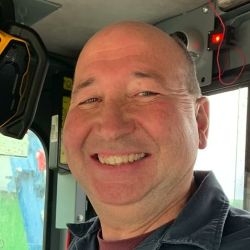
John Gaska, retired research agronomist, UW-Madison
John Gaska has dedicated his career to advancing agricultural research while remaining deeply grounded in the values of stewardship, service, and care for the land. Raised on a diversified family farm in Dodge County, John grew up understanding both the challenges and responsibilities that come with feeding communities from the soil up. Following a 35-year career as a Research Agronomist with the University of Wisconsin–Madison Agronomy Department, he continues to invest his time and expertise in helping shape a more regenerative future for agriculture through his volunteer leadership with Fields of Sinsinawa.
At Soul of the Soil, John will share early findings from Fields of Sinsinawa’s Carbon Benchmarking Program, an initiative exploring how management practices influence soil carbon, ecosystem function, and long-term agricultural resilience. Drawing from both scientific research and a lifelong commitment to learning, John offers insight into the opportunities and complexities of measuring progress in regenerative systems. His work reflects a belief that agriculture can care for the earth while also providing abundant, nourishing food for all.
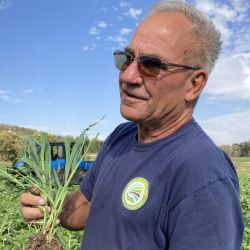
Rick Bieber, Fields of Sinsinawa
Rick Bieber has spent decades demonstrating what can happen when farmers place the needs of the soil at the center of their management decisions. A retired farmer and rancher from Trail City, SD, Rick began transitioning to no-till farming in the 1980s and later incorporated cover crops and adaptive grazing into his operation. Over time, what began as an effort to improve farm economics evolved into a deep commitment to restoring soil function, biodiversity, and ecological resilience.
Rick often speaks about the incredible biological diversity that emerges when soils begin to heal—from microscopic life beneath the surface to the return of wildlife across the landscape. His experience has led him to share regenerative agriculture insights with audiences in more than 20 countries around the world, including Australia, Kazakhstan, and Ukraine. At Fields of Sinsinawa, Rick has been working closely with local farmers and tenants to implement the five soil care principles.
At Soul of the Soil, Rick will join Dennis Busch and John Gaska in sharing insights from Fields of Sinsinawa’s water monitoring and Carbon Benchmarking initiatives. Together, they will explore the connections between management practices on the land, soil biology and functionality, and downstream water quality—offering a grounded, systems-based perspective on what regenerative agriculture can look like in practice.
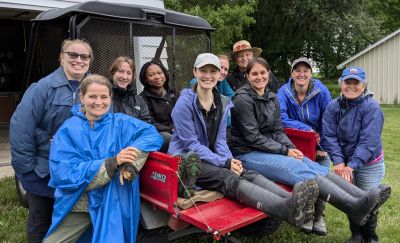 Jodi Enos-Berlage and the Regenerating Soil and Community Project Team
What happens when soil health work focuses as much on people as practices? This session explores a Northeast Iowa project that combines in-depth interviews, soil and water testing, on-farm support, cost-share, strengths-coaching, co-designed educational programming, and relationship-building to help landowners and farmers take meaningful steps toward regenerative agriculture. Thus far, all participants have been women landowners, and outcomes have surpassed expectations. Hear directly from these women about how community, confidence, and connection are helping regenerative practices take root, and how this model could be replicated elsewhere.
 Hunter Jancek, Westbluff Market
What if buying local food were just as convenient as shopping at a supermarket—and better for farmers, consumers, and the environment?
Hunter Jancek, co-founder of Westbluff Market, a Dubuque-based local food marketplace dedicated to making it easier for people to eat healthy, locally produced food while supporting regenerative agriculture and reducing waste, will share the story behind the development of this new model for local food systems. He'll explore how shortening the distance between producer and consumer can improve food quality, reduce waste, expand access to healthy food, and support agricultural practices that care for the land. From reusable packaging and innovative distribution to building stronger relationships between farmers and their communities, this session offers a practical look at how rethinking local food markets can create lasting benefits across the entire food system
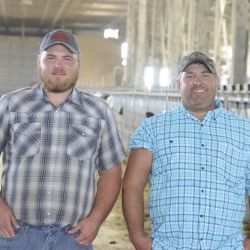 Aaron and Troy Leibfried, Leibfried Organic Dairy
Change isn't always easy—especially when current practices seem to be working just fine. Aaron and Troy Leibfried will share the story of how their thinking evolved as a result of working with Fields of Sinsinawa at Sinsinawa Mound.
What began with a healthy dose of skepticism has grown into a willingness—even an eagerness—to experiment with new ideas. Through on-farm demonstrations, collaboration, and firsthand observation, they've discovered the value of diverse cover crop mixes, adaptive grazing, and other regenerative practices. Those lessons have extended well beyond the acres they farm at Sinsinawa, influencing management decisions on their own operation. Join Aaron and Troy for an honest conversation about what it takes to challenge assumptions, try something new, and discover opportunities you didn't expect.
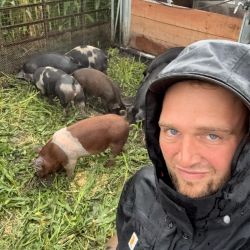 Jessie Poessnecker, Regenesis Acres
Building a profitable farm on limited acreage requires more than hard work—it requires creativity. At Regenesis Acres in northeast Nebraska, Jessie Poessnecker has embraced biodiversity as the foundation of a resilient farming system. By integrating crops, livestock, and innovative infrastructure—including a home-built Stock Cropper-inspired grazing system and mobile chicken barns—he is finding ways to stack enterprises, improve soil health, and create multiple streams of farm income.
In this session, Jessie will share how diversity has become one of his farm's greatest assets. From raising pasture-based pork and poultry to producing grains, vegetables, and eggs for local customers, he'll discuss the practical decisions, challenges, and opportunities involved in building a regenerative business from the ground up. Whether you're farming thousands of acres or just getting started, you'll come away with ideas for creating a more resilient, profitable, and biologically rich farming operation.
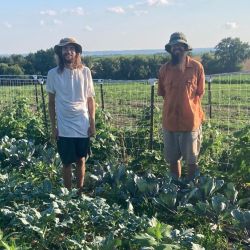 Matt Rhomberg and John Demmunik
How do regenerative principles translate to an intensive vegetable operation? Matt Rhomberg and John Demunnik of Rising Sun Garden will share how they're applying no-till methods, diverse crop rotations, and soil-building practices to grow fresh, organic vegetables while minimizing disturbance to the soil.
As members of the Sinsinawa Collaborative Farmers, Matt and John are helping bring regenerative food production to Sinsinawa Mound, where they cultivate vegetables alongside additional acreage in eastern Iowa. In this session, they'll discuss what they've learned during the early years of building their farm, including the rewards and challenges of producing high-quality food on a small scale. Whether you're a vegetable grower, row crop farmer, or backyard gardener, you'll gain practical ideas for building healthier soils while growing abundant, nutrient-dense food.
Accommodations: A block of rooms has been reserved at Stoney Creek Inn in Galena, IL.
Doubles and Kings are $60/night; larger rooms are $109-$149/night. To access the special rates, go to www.stoneycreekhotels.com/hotel/galena/ and plug in SMC in the promo bar or call the front desk at 815-777-2223 and let them know you are attending a conference at Sinsinawa Mound Center. Rooms will be relseased to the general public on July 24. After that date, the special rates will still be available, but rooms may book up fast.
Rooted in Soil. Growing Together.